
How to Use Shoe Brushes: A Guide to Proper Leather Shoe Care

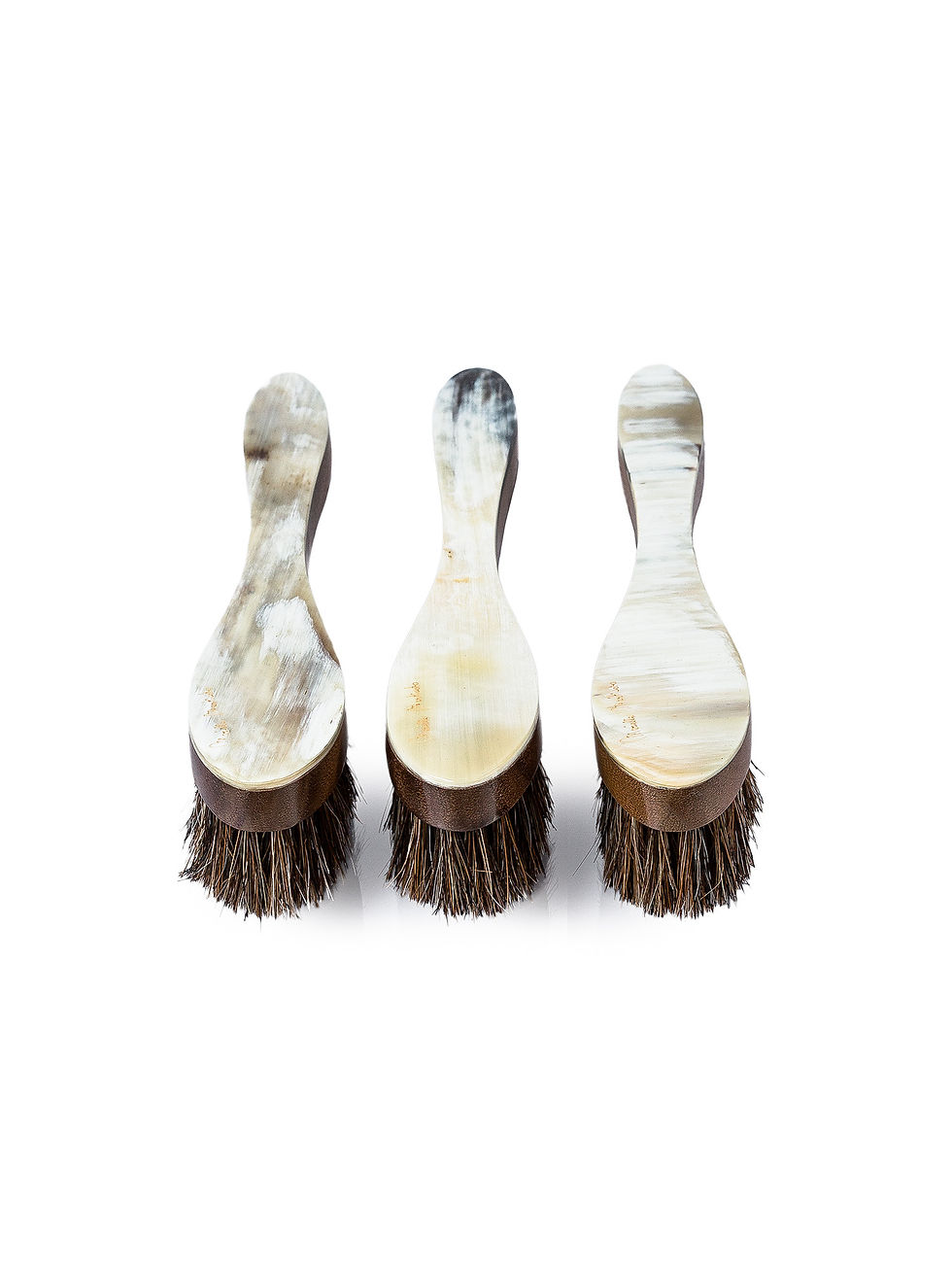
A good pair of shoes deserves proper care.
Shoe brushes are more than simple accessories. They help remove dust and dirt, distribute creams and waxes, and maintain the appearance of leather over time.
Used correctly, they can help preserve the elegance, finish, and condition of quality leather footwear.
The basic rule is simple:
clean first, condition second, polish last.
Which Shoe Brush Should You Use?
Different brushes serve different purposes.
Cleaning Brush
A cleaning brush removes dust, dried dirt, and surface debris before any polish or cream is applied.
Its bristles can be slightly firmer than those of a polishing brush, but they should still be used with controlled, gentle movements.
Polish Applicator Brush
A smaller applicator brush helps distribute cream or polish across the shoe, especially around seams, edges, and areas that are difficult to reach with a cloth.
Martinato offers a handcrafted horsehair polish applicator designed for this stage of shoe care.
Polishing Brush
A polishing brush is usually larger and made with softer bristles, often natural horsehair.
Its purpose is to remove excess product and create shine through fast, light brushing.
The Martinato “Sciuscià” shoe brush is designed specifically for this traditional polishing step.
Why Is Horsehair Used for Shoe Brushes?
Horsehair has long been used for shoe polishing because it combines softness, flexibility, and resilience.
The bristles move quickly across smooth leather without feeling overly aggressive.
During polishing, this movement helps distribute the product and create a more even finish.
It is a simple natural material that remains highly effective for traditional leather care.
How to Brush Leather Shoes Properly
1. Remove Dust and Dirt
Make sure the shoes are dry.
Brush the entire surface using regular strokes, paying particular attention to seams, edges, and the area close to the sole.
If mud is present, allow it to dry before brushing it away.
2. Apply a Small Amount of Cream or Wax
Use a product suitable for the leather type and color.
Start with a small quantity and distribute it evenly using a soft cloth or polish applicator brush.
Allow it to absorb for a few minutes.
3. Polish with a Soft Brush
Once the product has settled, use a clean, dry polishing brush.
Work with quick, light, continuous movements.
Heavy pressure is not necessary. The movement of the bristles does most of the work.
How Often Should You Brush Your Shoes?
Cream or wax does not need to be applied after every wear.
Light brushing, however, can be done much more often.
Regularly removing dust and surface residue helps keep leather clean while reducing the need for more intensive treatment.
A practical routine might include:
light brushing after several wears;
conditioning when the leather begins to look dry or dull;
more thorough polishing when needed or before a special occasion.
Should You Use More Than One Shoe Brush?
Ideally, yes.
Avoid using the same brush for very dark polish and light-colored leather.
Small traces of pigment can remain in the bristles and transfer to another pair of shoes.
For a simple care kit, consider keeping separate brushes for:
general cleaning;
dark-colored polish;
light or neutral-colored shoes.
How to Clean a Shoe Brush
After use, remove excess dust or polish by gently tapping the brush or working it against a clean cloth.
Natural horsehair brushes should generally not be soaked in water or treated with harsh detergents.
Kept clean and dry, a quality brush can remain useful for many years.
What About Suede and Nubuck?
The advice above applies mainly to smooth leather.
Suede and nubuck require dedicated tools, such as crepe rubber brushes or specialized suede brushes designed to restore the material’s nap.
Before using any brush, always check the type of leather you are treating.
Don’t Forget the Details
Good shoe care is visible in the small areas.
Edges, seams, and the space where the upper meets the sole often collect dust and residue.
A smaller brush can be especially useful for these parts.
This attention to detail is what separates a quickly polished shoe from one that has truly been cared for.
Brush Often, Polish When Necessary
One of the simplest shoe care rules is also one of the most effective:
brush often, polish less.
Regular brushing removes dust and keeps the surface looking clean.
Creams and waxes should be applied in moderation and only when needed.
Frequent, gentle care is usually preferable to occasional aggressive treatment.
Shoe Care and Long-Term Durability
Shoe care is not only about appearance.
Regular cleaning and maintenance can also help preserve the leather and reduce visible wear over time.
The same principle applies to other wardrobe accessories.
A quality shoehorn, for example, can help protect the heel counter by avoiding repeated crushing while putting shoes on.
Small tools, used consistently, can make a real difference.
Why Choose a Martinato Handcrafted Shoe Brush?
A shoe brush is a simple object.
That simplicity is exactly where quality becomes visible: in the handle, balance, bristle density, materials, and finishing.
Martinato creates shoe and clothing care accessories using natural horsehair, genuine horn, and selected woods, combining everyday functionality with Italian craftsmanship.
Explore the Clothing and Shoe Care collection or discover the complete Martinato Collection.
Because shoe care is not only maintenance.
It can become a small ritual that helps preserve the value of well-made things.


Comments